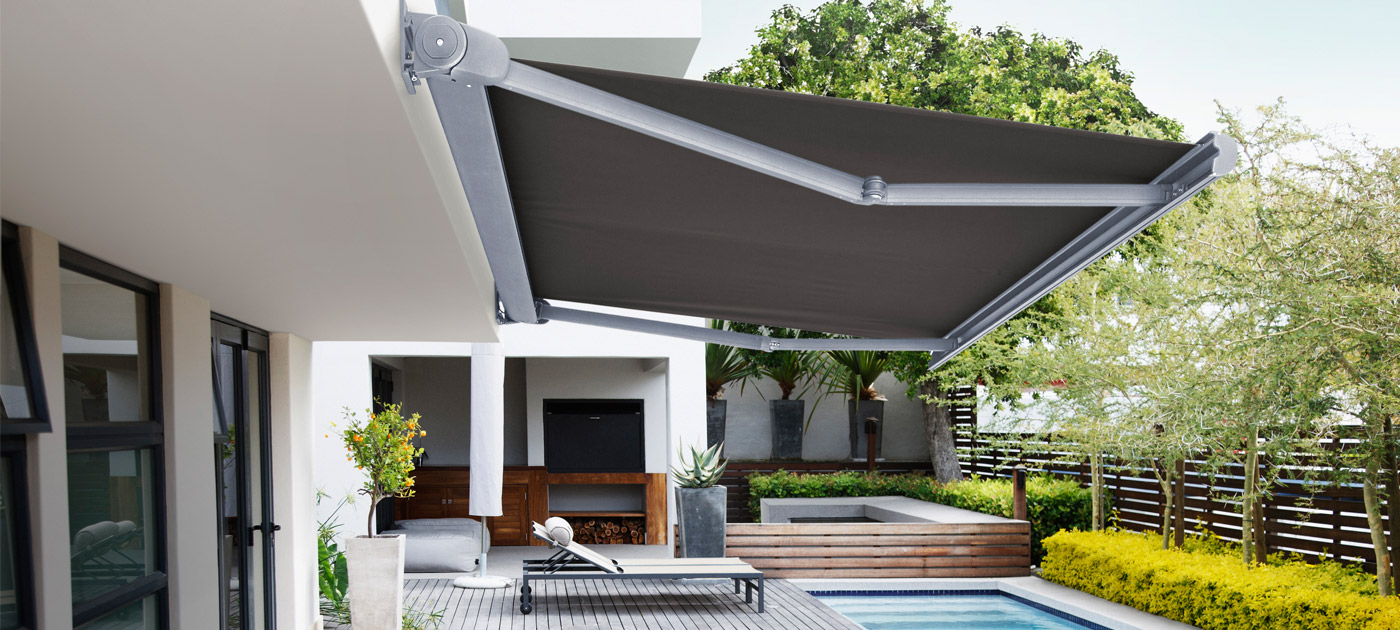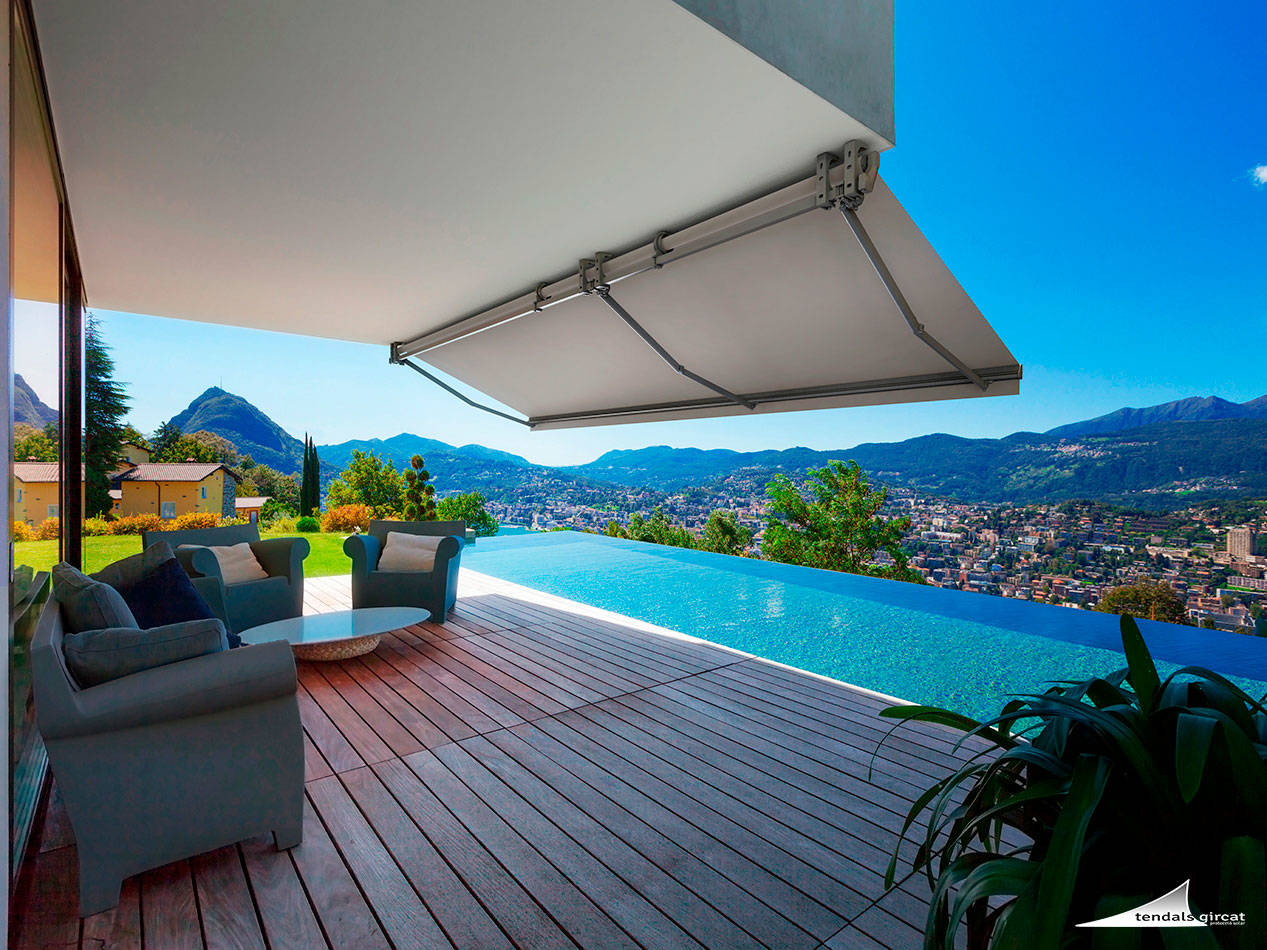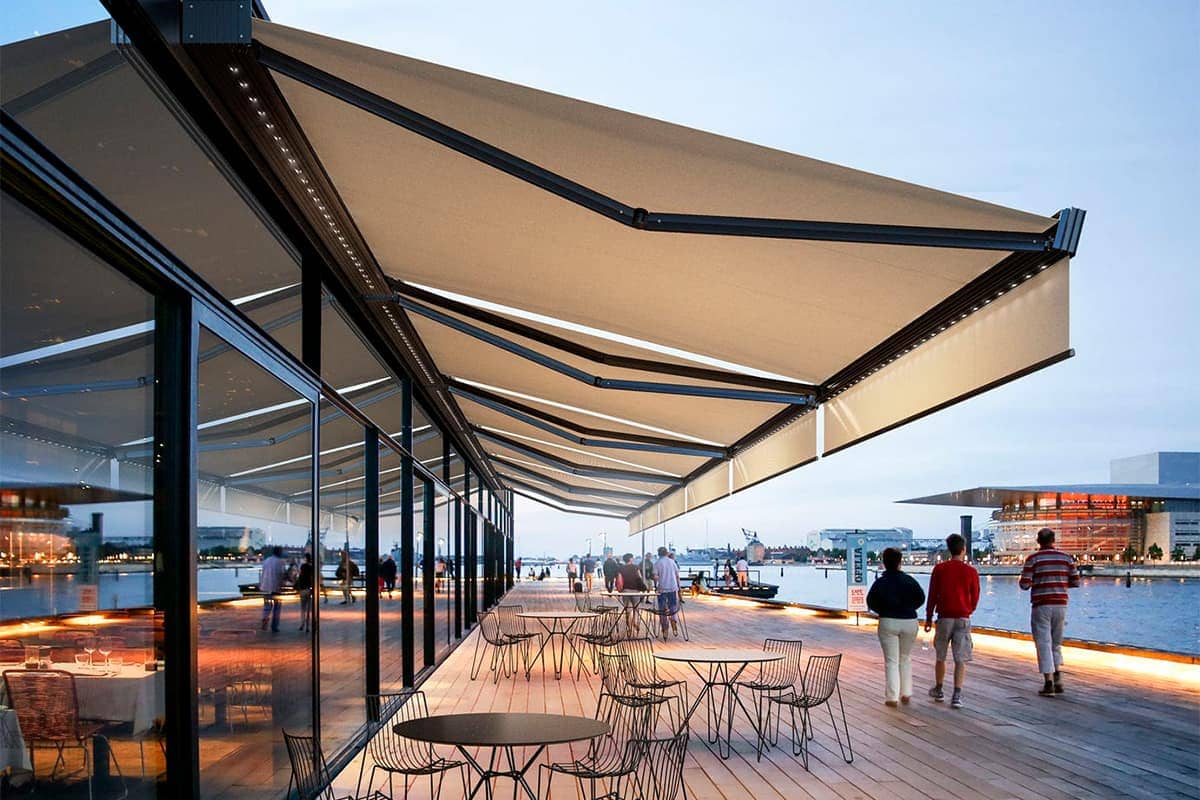
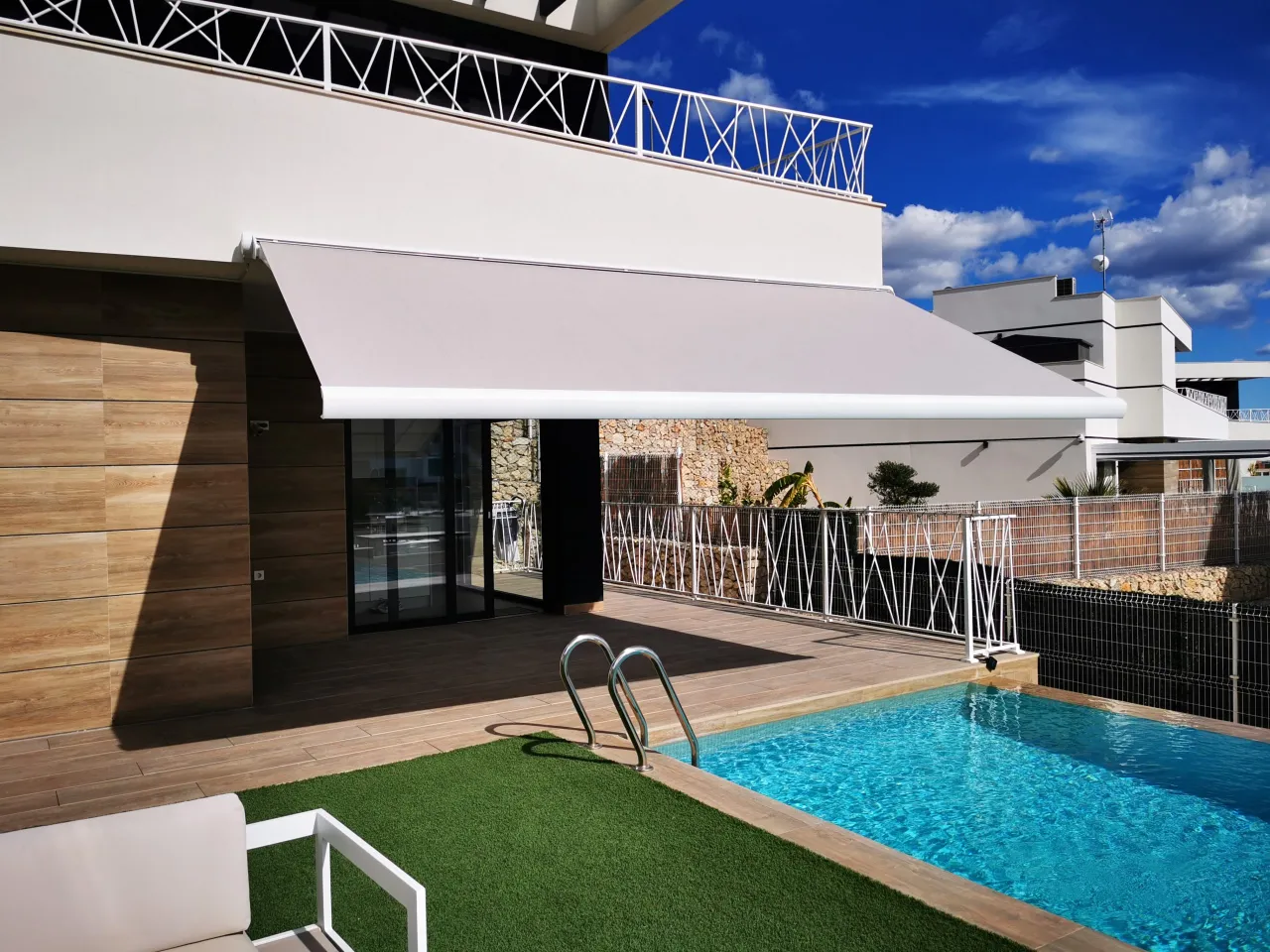
Yes, in most cases you need approval from your “comunidad de propietarios” (the Spanish equivalent of a homeowners’ association) to install an awning. The Horizontal Property Act (“Ley de Propiedad Horizontal” or LPH) regulates modifications to building façades, and an awning is considered an alteration to common elements. However, the process is simpler than it sounds: with the right application and respecting the building’s aesthetics, more than 85% of requests are approved at the first meeting. On the Costa Blanca, where we enjoy over 300 days of sun a year, awnings aren’t a luxury but a necessity, and communities know it.
This guide walks you through what the law says, what your community can regulate, how to secure approval, and what to do if you’re refused.
What does the Horizontal Property Act say about awnings?
The Horizontal Property Act (Ley 49/1960, last amended in 2022) is the basic Spanish law governing communal living in apartment buildings. The articles most relevant to awning installation are:
- Article 7.1: Prohibits owners from making alterations to common elements without community authorisation. The façade is considered a common element, and the awning is anchored to it.
- Article 12: Establishes that works modifying the configuration or external state of the building require agreement of three-fifths (3/5) of owners, who in turn represent three-fifths of the participation quotas.
- Article 17.6: Aesthetic modifications to the façade that do not alter the structure may be approved by simple majority in some cases.
- Article 18: Allows judicial challenge of agreements that are contrary to law or seriously harmful.
In practice, most communities already have a previous agreement on awnings that establishes the model, colour and dimensions allowed. If yours does, you only need to notify the administrator and follow the agreed specifications.
What can the community regulate about my awning?
The community has authority to regulate several aspects of awnings installed in the building. The most common are:
| Regulated aspect | Typical example | Owner’s choice margin |
|---|---|---|
| Fabric colour | Plain green, plain burgundy, blue/white stripes | None - must match approved colour |
| Model / type | Folding-arm, cassette, drop-arm | Limited to approved type |
| Maximum dimensions | Window opening width + 20 cm | Can be smaller, not larger |
| Hardware material | White-lacquered, natural aluminium | As per agreement |
| Installation height | Minimum 2.20 m above pavement | Regulated by municipal rules |
| Advertising / text | Prohibited in residential | No exceptions |
Importantly, the community cannot prohibit awning installation arbitrarily. Spanish jurisprudence has established in multiple rulings (such as Spanish Supreme Court ruling STS 1023/2005) that denying the right to protect against the sun without justified motive can be considered abuse of rights, especially in high-insolation zones like the Costa Blanca.
What does the approval process look like, step by step?
Following the correct process significantly increases your chances of success:
Step 1: Check the statutes and previous agreements
Before anything, ask your property administrator (“administrador de fincas”) for a copy of:
- The community’s statutes
- Minutes from previous meetings where awnings were discussed
- The current aesthetic regulations of the building
In many Costa Blanca buildings constructed after 1990, an agreement already exists establishing the permitted awning model and colour. If so, you only need to notify your intention.
Step 2: Request a professional quote
Get a detailed quote that includes:
- Exact awning model (brand, reference)
- Fabric and hardware colour
- Dimensions
- Anchoring system (how it attaches to the façade)
- Photo or render of the result
At Optim Toldos we prepare quotes with all the documentation needed to present to your community, including technical data sheets and visual simulations.
Step 3: Submit the request to the administrator
Send your request in writing (email with read receipt or “burofax” certified mail) to the administrator including:
- Your name, flat number and letter
- Description of the awning you want to install
- Quote and technical documentation
- Request to include the matter on the agenda of the next community meeting
Step 4: Defending your case at the owners’ meeting
On the day of the meeting, present your case clearly:
- Explain the need (south-facing orientation, indoor temperature, energy savings)
- Show photos of the proposed model
- Highlight that the installation does not damage the façade
- Offer that all neighbours can install the same model
Step 5: Approval and execution
If approved, ask for a copy of the minutes and proceed with installation. If conditions are attached, make sure to comply with them all.
What if the community refuses my awning?
If the community rejects your request, you have several legal options:
1. Request mediation
Before going to court, you can propose mediation through the Valencia regional government’s mediation service. It’s free, fast (2-4 weeks) and often produces satisfactory agreements.
2. Challenge the resolution in court
Under Article 18 of the LPH, you can challenge the resolution within 3 months if you believe it:
- Is contrary to law or to the statutes
- Causes serious harm to your interests
- Constitutes abuse of rights by the majority
Spanish courts have ruled in favour of the owner requesting awning installation on numerous occasions, especially when:
- The home has a south or southwest orientation
- There are no objective aesthetic reasons for the refusal
- Other neighbours already have awnings installed
- The area has high insolation (as throughout the Alicante province, with average summer UV indices of 6-8)
3. Propose alternatives
Sometimes the refusal is about the proposed model. Offer alternatives that may satisfy the community:
- Cassette awnings that are completely hidden when retracted
- Neutral colours that integrate with the façade
- Reversible installation with no visible drilling
What municipal regulations apply on the Costa Blanca?
In addition to the LPH, the local council has its own urban planning rules affecting awnings:
Local Urban Plan (PGOU)
- Overhang on public street: Awnings can project from the façade by a maximum of 3 metres but must maintain a minimum clearance of 2.20 metres above the pavement.
- Notification: If the awning projects more than 50 cm over the public street, it may need prior notification to the council (“declaración responsable” - responsible declaration).
- Accessibility: Cannot interfere with traffic signs, traffic lights or street lighting.
Old Town and BIC Zones
In the old town of Alicante and zones designated Bien de Interés Cultural (BIC, the Spanish heritage protection status), such as the surroundings of Santa Bárbara Castle or San Nicolás Co-cathedral, additional restrictions apply:
- Only fabric awnings in approved colours are allowed (typically cream, off-white or dark green)
- Aluminium or polycarbonate awnings are prohibited
- A planning licence is required (a “declaración responsable” alone is not enough)
- Resolution can take 2-3 months
Coastal zones
In buildings on the front-line beach (Playa de San Juan, Postiguet, Albufereta), the Spanish Coastal Act may apply additional restrictions, although it generally only affects ground floors and commercial premises.
What are the special cases?
Ground-floor flats with terrace or garden
Ground-floor owners are in a particular situation. If the terrace or garden is for private use (not a common element), restrictions are lighter, but anchoring to the façade still requires approval. An alternative is free-standing awnings or shade sails, which don’t require façade anchoring.
Commercial premises
Ground-floor commercial premises generally have more freedom, since their awnings are often regulated by municipal rules rather than the community. However:
- They need a “declaración responsable” or council licence
- They cannot cover more than 60% of the pavement width
- They must respect the building’s aesthetic if the community has set rules
- Awnings with advertising have additional restrictions on letter size and content
Listed or heritage-protected buildings
On the Costa Blanca there are around 180 buildings with some grade of heritage protection. In these cases:
- Any façade intervention requires a favourable report from the regional Culture department
- Only traditional materials and colours are permitted
- The process can extend to 3-6 months
- We recommend hiring a heritage-specialist technician
Penthouses and top floors
Penthouse owners wanting to install awnings on upper terraces should bear in mind that the building roof is always a common element. Installing pergolas or fixed structures on the rooftop requires unanimity under Article 17.6 of the LPH. A bioclimatic pergola can be an alternative if installed as a removable element.
Tips to secure community approval
Based on our experience with hundreds of installations in Costa Blanca communities, these are the tips that work best:
-
Propose a solution for the whole building: Instead of asking permission only for your awning, suggest that the community approve a standard model for everyone. This makes approval enormously easier.
-
Provide energy-savings data: An awning can reduce indoor temperature by 8-12°C in summer, which translates to 20-40% savings on air conditioning. On the Costa Blanca, where summer runs from May to October, the annual saving can exceed €300 per home.
-
Show examples of similar buildings: Photos of neighbouring buildings with awnings uniformly installed are very persuasive.
-
Offer a trial period: Propose installing your awning for one season so the community can evaluate the result before making a final decision.
-
Find allies among neighbours: If other owners also want to install awnings, submit a joint request. A petition from 4-5 neighbours carries far more weight than an individual one.
-
Choose discreet models: Cassette awnings, which are completely hidden when retracted, generate fewer aesthetic objections. They’re slightly more expensive (15-25% more), but the difference is worth it.
Frequently asked questions
Can I install an awning without community permission?
Technically no, you shouldn’t. If you do, the community can demand removal through a meeting resolution and, if you don’t remove it, take you to court. However, if 4 years pass from installation without the community acting, the action may be considered time-barred.
How much does the approval process cost?
The process itself has no cost. You just need to submit documentation. The awning quote and technical data sheet are the main documents, and at Optim Toldos we provide them free of charge. Request your quote here.
How long does the full process take?
From the request to the administrator to installation, the typical timeframe is 1 to 3 months, depending on when the next ordinary meeting is held. If urgency is needed, you can request an extraordinary meeting (it must be convened if 25% of owners request it).
Can a tenant request awning installation?
Not directly. The tenant must ask the owner to initiate the process with the community. Installation costs and responsibility fall on whoever the landlord and tenant agree in their tenancy contract.
What if there are already different awnings in the building?
This situation is very common in older Costa Blanca buildings. If awnings of different models and colours already exist, the community cannot demand a specific model from you if it hasn’t demanded it from others. This argument is legally very strong.
Do motorised awnings need additional permission?
No, the type of operation (manual or motorised) does not affect the need for authorisation or the process. What the community regulates is the external aesthetic, not the internal mechanism.
Summary: what you need to know
| Situation | Permission needed? | Type of agreement |
|---|---|---|
| Building with awning rules in place | Just notify the administrator | Already pre-approved |
| Building without prior rules | Yes, request at meeting | 3/5 majority |
| Ground floor with private garden (no façade anchoring) | Not necessarily | Check statutes |
| Commercial premises | Council licence | ”Declaración responsable” |
| Heritage-protected building | Yes + Culture department report | Unanimity in some cases |
On the Costa Blanca, with summer temperatures exceeding 35°C and solar radiation among the highest in Europe, awning installation is practically a necessity (see our complete guide to choosing awnings on the Costa Blanca). Communities understand this, and the approval process - while requiring patience - is favourable in the vast majority of cases.
If you need advice on choosing the right awning or preparing the documentation for your community, browse our awnings catalogue or contact us for a no-obligation visit. We’ve spent years helping Costa Blanca residents navigate this process successfully.